

Difference Between Viral and Bacterial Infections


Introduction: Why Understanding the Difference Matters
Viral and bacterial infections are among the most common health challenges worldwide — yet they are often confused. Both can cause fever, fatigue, sore throat, or cough, leading many people to self-diagnose and, worse, self-treat with antibiotics.
However, bacteria and viruses are fundamentally different organisms that require entirely different therapeutic approaches. Knowing how to distinguish one from the other is not just a matter of curiosity — it’s essential for accurate diagnosis, effective treatment, and the prevention of antibiotic resistance.
1. The Core Biological Difference
| Feature | Bacteria | Viruses |
| Structure | Living, single-cell organisms | Non-living particles (need a host cell to reproduce) |
| Size | About 1000 times larger than viruses | Extremely small (measured in nanometers) |
| Reproduction | Independent, through cell division | Only inside living cells (parasitic) |
| Treatment | Antibiotics or targeted therapies | Antiviral or immune-based treatments |
| Examples | Streptococcus, E. coli, Staphylococcus | Influenza, COVID-19, Herpes, RSV |
In short:
- Bacteria can live almost anywhere — soil, water, and inside the human body — and some are even beneficial.
- Viruses, on the other hand, are obligate parasites — they hijack host cells and force them to produce copies of the virus itself.
2. Symptoms: Key Patterns That Help Differentiate
Although symptoms may overlap, there are notable patterns that help physicians and patients identify the likely cause:
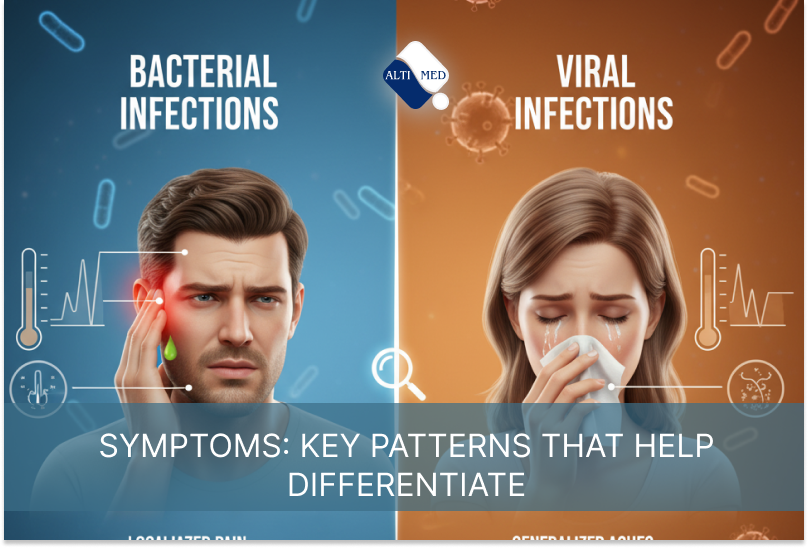
Typical Signs of Bacterial Infections
- Localized pain or inflammation (e.g., ear, throat, skin)
- Persistent fever that doesn’t subside
- Thick, green/yellow mucus or pus
- Fatigue combined with organ-specific issues (urinary pain, sinus blockage)
Typical Signs of Viral Infections
- Generalized body aches
- Sudden onset fever that resolves in 3–5 days
- Clear nasal discharge or watery secretions
- Symptoms that improve naturally with rest and hydration
⚕️ Important: Only diagnostic testing can provide certainty. Many infections — such as pneumonia or tonsillitis — can be caused by either bacteria or viruses.
3. Diagnosis: From Laboratory Tests to Modern Scanning

Traditional Laboratory Methods
- Microscopy & Cultures: Identify bacterial colonies directly, though results can take several days.
- Blood and Urine Tests: Evaluate inflammation, infection markers, and organ involvement.
Modern Diagnostic Innovations
Modern medicine increasingly relies on non-invasive functional diagnostics, which allow evaluation of the entire body’s response to pathogens.
In clinics like Altimed, full-body scanning technologies help assess organ stress and immune reactivity — detecting imbalances before symptoms worsen.
This approach complements laboratory results, offering a comprehensive view of infection-related disturbances and the body’s adaptive capacity.
4. Treatment Strategies: Tailoring to the Cause
For Bacterial Infections
- Antibiotics remain the mainstay, but they must be used only when the infection’s bacterial nature is confirmed.
- Supportive measures include hydration, rest, and immune support.
- Overuse or misuse of antibiotics can lead to resistance, making future infections harder to treat.
For Viral Infections
- No antibiotics. Treatment focuses on supporting the immune system.
- Modern therapies may include frequency-based or bioresonance interventions to stimulate immune regulation and accelerate recovery.
5. Prevention: Building a Strong Defense
- Maintain balanced immunity through proper nutrition and sleep.
- Support the gut microbiome, which plays a vital role in infection resistance.
- Avoid self-medication and seek professional diagnostics before taking antibiotics.
- Regular health monitoring helps detect latent infections and systemic stress early.


