

Biological and Chronological Age: Why the Number in Your Passport Does Not Always Reflect the Condition of Your Body

- What Is Chronological Age?
- What Is Biological Age?
- Why People Age at Different Rates
- What Does the Difference Between Biological and Chronological Age Mean?
- Which Body Systems Influence Biological Age the Most?
- Why Biological Age Cannot Be Determined by a Single Test
- Telomeres, Epigenetics, and Modern Aging Research
- Can Biological Age Be Influenced?
- How Functional Health Is Evaluated Today
- Key Takeaways
- FAQ
- Conclusion
When people talk about age, they usually mean the number of years that have passed since birth. This is the measure used in official documents, medical records, statistics, and most social processes. However, modern medicine and gerontology are increasingly paying attention to another indicator – biological age.
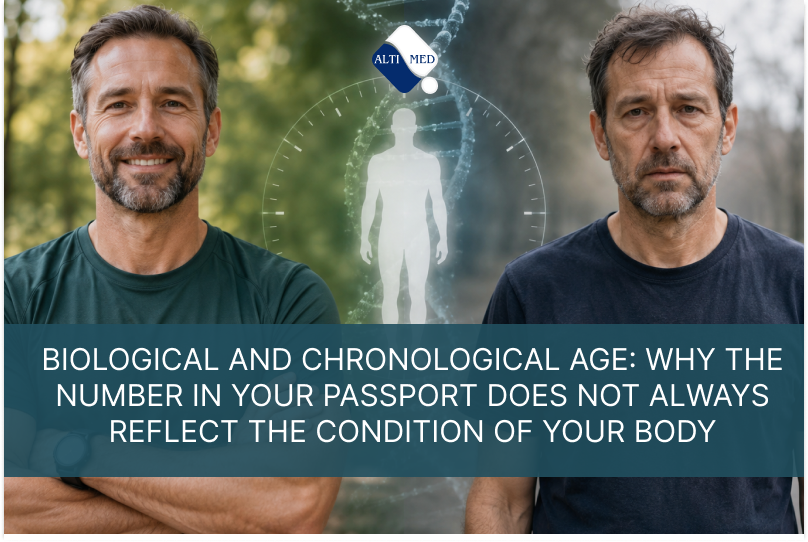
Two people may have the same chronological age, for example 45 years old, yet differ significantly in energy levels, physical endurance, cardiovascular health, sleep quality, recovery capacity, and risk of chronic disease. This is why specialists increasingly focus not only on how old a person is, but also on how efficiently their body functions.
Understanding the differences between biological and chronological age helps provide a new perspective on the aging process and a better understanding of why people age at different rates.
What Is Chronological Age?
Chronological age is the number of years, months, and days that have passed since a person was born.
It is an objective measurement that is calculated in the same way for everyone.
Chronological age allows us to:
- define age categories;
- assess statistical disease risks;
- apply age-based medical recommendations;
- conduct demographic research.
However, chronological age by itself says very little about the current functional condition of the body.
People of the same age may have completely different levels of health, physical capability, and adaptive reserves.
What Is Biological Age?
Biological age reflects the current functional condition of the body and the rate at which aging processes occur.
Unlike chronological age, it does not indicate how many years a person has lived. Instead, it helps assess how effectively different body systems function compared with average age-related expectations.
Biological age is considered a composite indicator that may take into account:
- cardiovascular health;
- respiratory system function;
- metabolism;
- physical activity levels;
- sleep quality;
- cognitive function;
- immune system status;
- hormonal balance;
- adaptive capacity of the body.
For this reason, biological age cannot be reduced to a single test or a single measurement.
It reflects the combined effect of multiple processes occurring throughout the body.
Why People Age at Different Rates
Aging is a complex biological process.
Its speed is influenced by dozens of factors.
Among the most significant are:
- genetic characteristics;
- physical activity levels;
- nutritional quality;
- sleep duration;
- chronic stress;
- inflammatory processes;
- harmful habits;
- cardiovascular health;
- environmental factors;
- the presence of chronic diseases.
This is why two people of the same age may have dramatically different health profiles.
One person may maintain high performance levels and good well-being, while another may experience chronic fatigue, reduced physical activity, and multiple age-related changes much earlier than expected.
What Does the Difference Between Biological and Chronological Age Mean?
A difference between the two ages is not a diagnosis.
It simply reflects how an individual’s aging rate differs from average expectations.
When Biological Age Is Higher Than Chronological Age
If biological age exceeds chronological age, it may indicate that the body is aging more rapidly.
This situation may be observed in the presence of:
- chronic stress;
- insufficient sleep;
- a sedentary lifestyle;
- prolonged inflammation;
- smoking;
- metabolic disorders;
- chronic diseases.
This does not mean that a person will necessarily develop serious health problems, but it may indicate a need for closer attention to lifestyle and disease prevention.
When Biological Age Is Lower Than Chronological Age
If biological age is lower than chronological age, this usually suggests a strong level of functional reserve within the body.
Contributing factors often include:
- regular physical activity;
- adequate sleep;
- balanced nutrition;
- stress management;
- absence of harmful habits;
- maintenance of a healthy body weight.
However, even in this situation, the concept is not about “rejuvenation,” but rather about a more favorable physical condition compared with average age-related expectations.
Which Body Systems Influence Biological Age the Most?
Cardiovascular System
The condition of the heart and blood vessels is considered one of the key factors of healthy aging.
Blood pressure, vascular elasticity, exercise tolerance, and circulatory health all have a significant impact on the body’s functional age.
Nervous System
Chronic stress can influence many aging-related mechanisms.
Prolonged psychological strain is associated with changes in hormonal regulation, sleep quality, and recovery processes.
Metabolic Health
Metabolism plays an important role in maintaining the body’s functional capabilities.
Disorders of glucose metabolism, excess body weight, and chronic inflammation may accelerate age-related changes.
Sleep and Recovery
During sleep, the body undergoes processes related to nervous system recovery, immune regulation, and energy metabolism.
Chronic sleep deprivation is increasingly recognized as a factor that may accelerate aging.
Immune System
Age-related changes in the immune system may influence the body’s ability to adapt to infections, inflammation, and various forms of stress.
Why Biological Age Cannot Be Determined by a Single Test
Many online tests claim they can determine biological age within a few minutes.
In reality, the situation is much more complex.
Aging affects multiple body systems simultaneously.
For this reason, biological age assessment is usually based on a combination of different indicators, including:
- physiological parameters;
- laboratory data;
- physical fitness measurements;
- cognitive characteristics;
- sleep quality information;
The more variables that are considered, the more objective the assessment may become.
Telomeres, Epigenetics, and Modern Aging Research
One of the most widely known areas of aging research involves telomeres – protective structures located at the ends of chromosomes.
Researchers are also actively studying epigenetic changes, which may reflect the accumulated effects of lifestyle, environmental influences, and biological processes.
However, modern specialists view biological age much more broadly than simply through the lens of telomeres or individual biomarkers.
Aging is a multifactorial process that cannot be fully described by a single measurement.
Can Biological Age Be Influenced?
Although it is impossible to stop the natural aging process, many factors related to functional health can be modified.
The most commonly highlighted include:
- regular physical activity;
- sleep optimization;
- chronic stress management;
- adequate nutrition;
- smoking cessation;
- maintaining a healthy body weight;
- prevention of chronic disease.
These factors are generally considered the foundation of healthy aging.
How Functional Health Is Evaluated Today
Modern approaches to healthy aging increasingly focus not only on chronological age but also on an individual’s functional capacity.
In addition to conventional medical examinations, various methods of comprehensive health assessment, functional screening, and digital health analysis may be used.
These methods do not determine the exact rate of aging, but they can provide a broader understanding of how different body systems are functioning and identify areas that may require additional attention.
Key Takeaways
- Chronological age reflects the number of years lived.
- Biological age reflects the current functional condition of the body.
- People of the same age may age at different rates.
- Biological age depends on multiple factors rather than a single measurement.
- Good functional health does not mean aging has stopped, but it may indicate preserved adaptive reserves.
- Modern approaches to aging increasingly focus on functional capacity rather than date of birth alone.
FAQ
Conclusion
Chronological age and biological age reflect different aspects of the same process. The first shows how many years have passed since birth, while the second helps assess the current functional condition of the body.
Modern perspectives on aging increasingly shift the focus away from the number listed in a passport and toward an individual’s ability to maintain health, activity, adaptive capacity, and quality of life. This is why understanding the difference between these two concepts has become an important part of modern health awareness and age-related disease prevention.


