

Pseudomonas Aeruginosa: Symptoms, Risks, and Why the Infection Requires Accurate Diagnosis

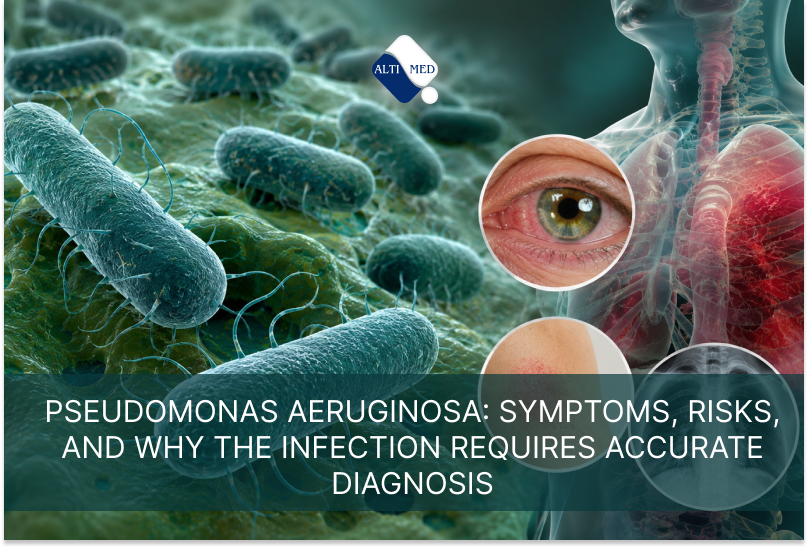
- Why Pseudomonas Aeruginosa Is Increasingly Associated With Chronic Inflammatory Conditions
- What Is Pseudomonas Aeruginosa
- Why Pseudomonas Aeruginosa Is Considered Dangerous
- Why the Infection May Become Chronic
- Main Symptoms of Pseudomonas Infection
- Why Pseudomonas Aeruginosa Is Commonly Associated With Hospital-Acquired Infections
- Why the Infection May Return After Antibiotics
- Pseudomonas Aeruginosa and Neuroimmune Stress
- How Pseudomonas Aeruginosa Is Diagnosed
- Prevention of Pseudomonas Infection
- FAQ
- Conclusion
Why Pseudomonas Aeruginosa Is Increasingly Associated With Chronic Inflammatory Conditions
Pseudomonas aeruginosa infection is considered one of the most resistant bacterial infections capable of persisting in the body for long periods and maintaining chronic inflammation even after multiple courses of therapy.
In modern medicine, Pseudomonas aeruginosa is viewed not only as a cause of acute infection, but also as a factor contributing to:
- prolonged inflammatory processes;
- recurrent infections;
- microbiome disruption;
- complications after antibiotic use;
- chronic irritation of mucous membranes;
- delayed tissue recovery.
One of the main challenges of this bacterium is its ability to:
- rapidly adapt;
- form biofilms;
- develop antibiotic resistance;
- survive within tissues and mucous membranes;
Because of this, Pseudomonas aeruginosa is increasingly viewed as part of a broader systemic condition associated with chronic neuroimmune stress and dysregulation of the body’s adaptive mechanisms.
What Is Pseudomonas Aeruginosa
Characteristics of the Bacterium
Pseudomonas aeruginosa is an opportunistic gram-negative bacterium widely found in the environment.
It may be present:
- in water;
- on wet surfaces;
- in air conditioning systems;
- in swimming pools;
- in soil;
- in medical environments;
- on equipment;
- in humid indoor areas.
One of the defining characteristics of the bacterium is its high survivability and ability to rapidly adapt to environmental changes.
For healthy individuals, temporary exposure does not always lead to infection. However, the risk significantly increases in cases of:
- weakened immune resistance;
- chronic inflammation;
- tissue damage;
- microbiome imbalance;
- prolonged antibiotic use;
- depleted adaptive reserves.
Why Pseudomonas Aeruginosa Is Considered Dangerous
Antibiotic Resistance as a Major Concern
One of the key characteristics of Pseudomonas aeruginosa is its high resistance to antibiotics.
The bacterium can:
- reduce sensitivity to treatment;
- alter its protective mechanisms;
- create biofilms;
- limit antibiotic penetration;
- adapt to therapeutic pressure.
As a result, self-treatment with antibiotics without proper diagnostics may:
- fail to eliminate the infection;
- contribute to chronic inflammation;
- increase bacterial resistance;
- disrupt the body’s microbiome.
Modern clinical guidelines increasingly emphasize the importance of accurate diagnostics and antibiotic sensitivity testing.
Why the Infection May Become Chronic
In some patients, Pseudomonas aeruginosa may:
- persist in the body for long periods;
- maintain chronic inflammation;
- trigger recurrent symptoms;
- create a state of ongoing neuroimmune stress.
Such processes are especially common:
- after severe infections;
- after hospitalization;
- after repeated antibiotic treatments;
- in chronic respiratory diseases;
- in gastrointestinal dysfunction;
- during chronic stress and physical exhaustion.
Main Symptoms of Pseudomonas Infection
Symptoms depend on the location of the inflammatory process and the overall condition of the body.
Pseudomonas Aeruginosa in the Lungs and Respiratory System
When the respiratory system is affected, symptoms may include:
- chronic cough;
- mucus production;
- prolonged bronchitis;
- shortness of breath;
- persistent inflammation;
- recurrent respiratory infections;
- slow recovery after illness.
Risk is especially high in patients:
- with chronic lung diseases;
- after prolonged hospitalization;
- with weakened immune resistance.
In some patients, the bacterium may maintain long-term inflammatory activity within the bronchopulmonary system.
Pseudomonas Aeruginosa in the Urinary Tract
The infection may cause:
- burning during urination;
- frequent urination urges;
- lower abdominal pain;
- discomfort;
- cloudy urine;
- chronic recurrent inflammation.
Risk increases:
- after catheter use;
- after surgery;
- after repeated antibiotic therapy;
- in chronic inflammatory conditions.
In some patients, symptoms may temporarily decrease and later return again.
Pseudomonas Aeruginosa in the Gastrointestinal Tract
When the gastrointestinal tract is affected, symptoms may include:
- abdominal pain;
- diarrhea;
- bloating;
- unstable bowel movements;
- mucus in the stool;
- signs of intestinal inflammation;
- increased gastrointestinal sensitivity.
After severe infections, some patients continue experiencing:
- microbiome imbalance;
- food sensitivity;
- chronic intestinal irritation;
- unstable digestion;
- symptoms resembling irritable bowel syndrome.
Skin and Wound Infections
Pseudomonas aeruginosa frequently affects:
- burns;
- postoperative wounds;
- chronic skin damage;
- moist tissue areas.
Symptoms may include:
- delayed healing;
- inflammation;
- pain;
- discharge;
- unpleasant odor;
- tissue discoloration.
The bacterium’s ability to form biofilms makes these infections especially resistant to therapy.
Why Pseudomonas Aeruginosa Is Commonly Associated With Hospital-Acquired Infections
The Role of Hospital Environments
Centers for Disease Control and Prevention classifies multidrug-resistant Pseudomonas aeruginosa as a serious healthcare-associated threat.
This is because the bacterium:
- survives well in moist environments;
- can persist on equipment;
- spreads efficiently in hospital settings;
- more frequently affects weakened patients.
The risk is especially high:
- after surgery;
- during mechanical ventilation;
- with catheter use;
- in intensive care units;
- after prolonged hospitalization.
Why the Infection May Return After Antibiotics
After prolonged or uncontrolled antibiotic use, patients may develop:
- microbiome disruption;
- reduced colonization resistance;
- overgrowth of resistant bacteria;
- chronic mucosal inflammation.
As a result, some patients develop:
- unstable symptoms;
- chronic inflammatory conditions;
- recurrent infections;
- increased gastrointestinal sensitivity;
- reduced resilience to stress and illness.
Pseudomonas Aeruginosa and Neuroimmune Stress
Modern research increasingly views chronic infections as a source of systemic neuroimmune burden.
During prolonged inflammation, patients may experience:
- chronic fatigue;
- reduced energy levels;
- sleep disturbances;
- anxiety;
- decreased stress tolerance;
- slower recovery;
- reduced adaptive capacity.
Such conditions are especially common in patients:
- after long inflammatory processes;
- after severe infections;
- with microbiome imbalance;
- after repeated antibiotic therapy;
- during chronic stress.
How Pseudomonas Aeruginosa Is Diagnosed
Why Accurate Diagnosis Matters
Due to the bacterium’s high resistance, self-treatment is often ineffective.
Diagnostics may include:
- bacterial culture testing;
- antibiotic sensitivity analysis;
- urine testing;
- sputum analysis;
- stool testing;
- inflammatory marker assessment;
- evaluation of chronic inflammatory conditions.
In prolonged cases, it is important to assess:
- immune system condition;
- systemic inflammation levels;
- microbiome status;
- gastrointestinal function;
- adaptive capacity of the body.
Why Chronic Bacterial Infections Require More Than Just Bacterial Detection
Altimed views chronic inflammatory processes and resistant bacterial infections as part of a broader systemic dysfunction affecting not only the infection site itself, but also the body’s overall functional state.
With long-term presence of Pseudomonas aeruginosa, the body may experience not only localized infection, but also:
- chronic neuroimmune stress;
- microbiome disruption;
- reduced adaptive reserves;
- systemic inflammatory tension;
- impaired tissue recovery;
- increased mucosal sensitivity;
- dysregulation of the nervous system.
Such conditions are especially common in patients:
- after repeated antibiotic treatments;
- after prolonged inflammatory processes;
- after hospitalization;
- with chronic urinary tract infections;
- with prolonged bronchopulmonary inflammation;
- with long-term gastrointestinal dysfunction.
That is why recurrent inflammatory conditions require evaluation not only of the bacterium itself, but also of:
- neuroimmune regulation;
- gastrointestinal function;
- systemic stress load;
- adaptive mechanisms;
- autonomic nervous system reactivity;
- resilience to chronic inflammation.
At Altimed, a comprehensive approach may include:
- functional body diagnostics;
- assessment of autonomic and adaptive function;
- evaluation of systemic stress;
- food tolerance assessment;
- nervous system support programs;
- recovery-oriented approaches for gastrointestinal and regulatory systems.
Depending on the clinical situation, approaches may include:
- bioresonance diagnostics;
- functional assessment of regulatory systems;
- adaptive support programs;
- methods aimed at restoring overall functional balance.
When Immediate Medical Attention Is Necessary
Urgent medical care is necessary in cases of:
- high fever;
- breathing difficulties;
- severe pain;
- signs of severe infection;
- pronounced weakness;
- postoperative inflammation;
- non-healing wounds;
- severe urinary tract infections.
Prevention of Pseudomonas Infection
Main preventive measures include:
- careful antibiotic use;
- management of chronic inflammation;
- microbiome support;
- proper hygiene;
- appropriate wound care;
- monitoring after surgery;
- maintaining adaptive resilience of the body.
FAQ
Conclusion
Pseudomonas aeruginosa is one of the most resistant bacterial infections capable of causing chronic inflammation, recurrent symptoms, and prolonged disruption of the body’s functional balance.
That is why recurrent infections, chronic inflammation, prolonged recovery, or persistent symptoms require not only bacterial identification, but also evaluation of microbiome status, neuroimmune regulation, adaptive mechanisms, and the body’s overall functional resilience.


